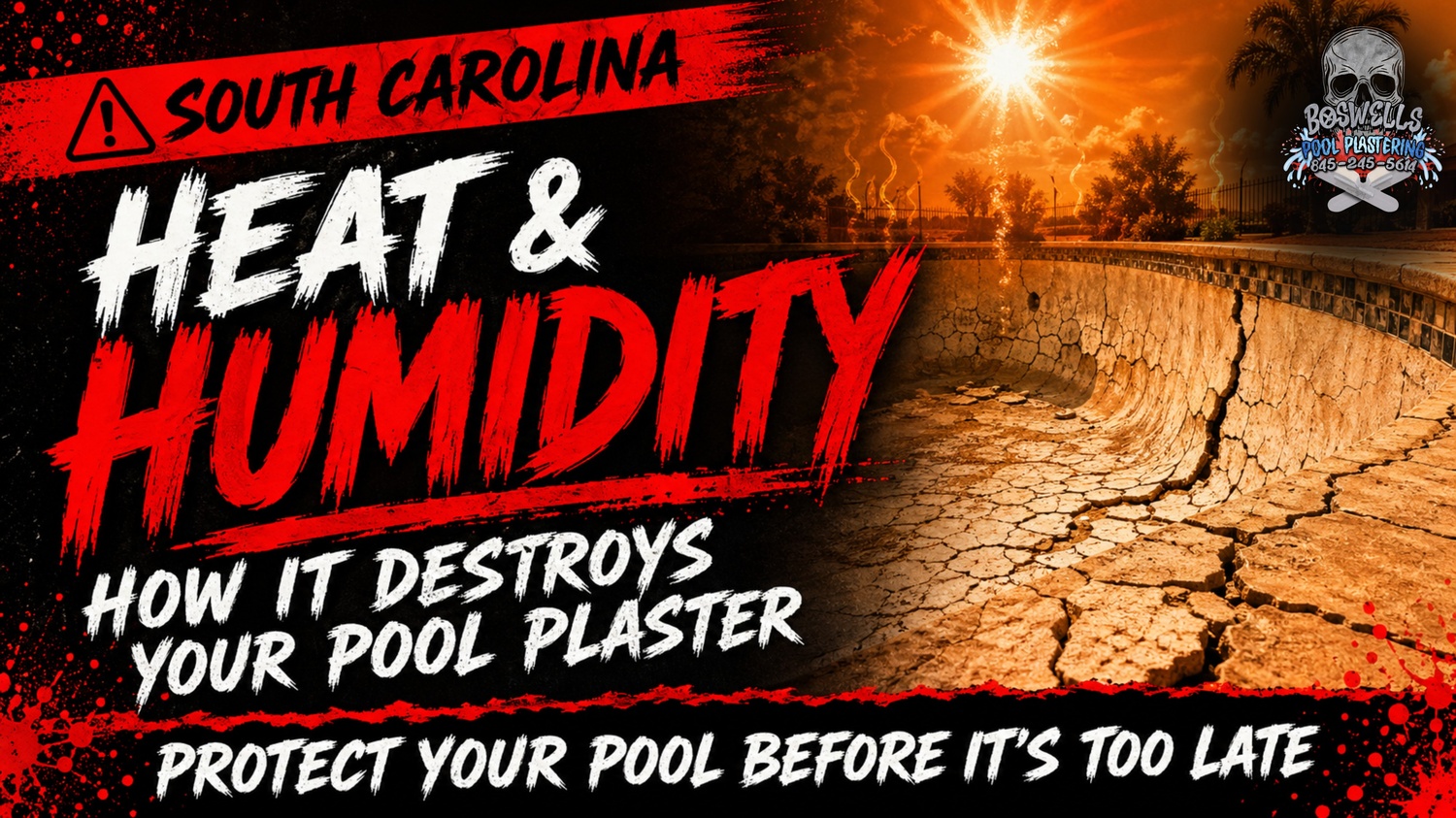
How Does South Carolina Heat and Humidity Affect Your Pool Plaster? If you own a pool in South Carolina, you already know the summers here are no joke. High heat, thick humidity, and months of heavy pool use create conditions that are genuinely tough on pool surfaces. At Boswell Pool Plastering, we see firsthand how these conditions impact plaster over time.
So how does South Carolina heat and humidity affect your pool plaster? More than most homeowners realize.
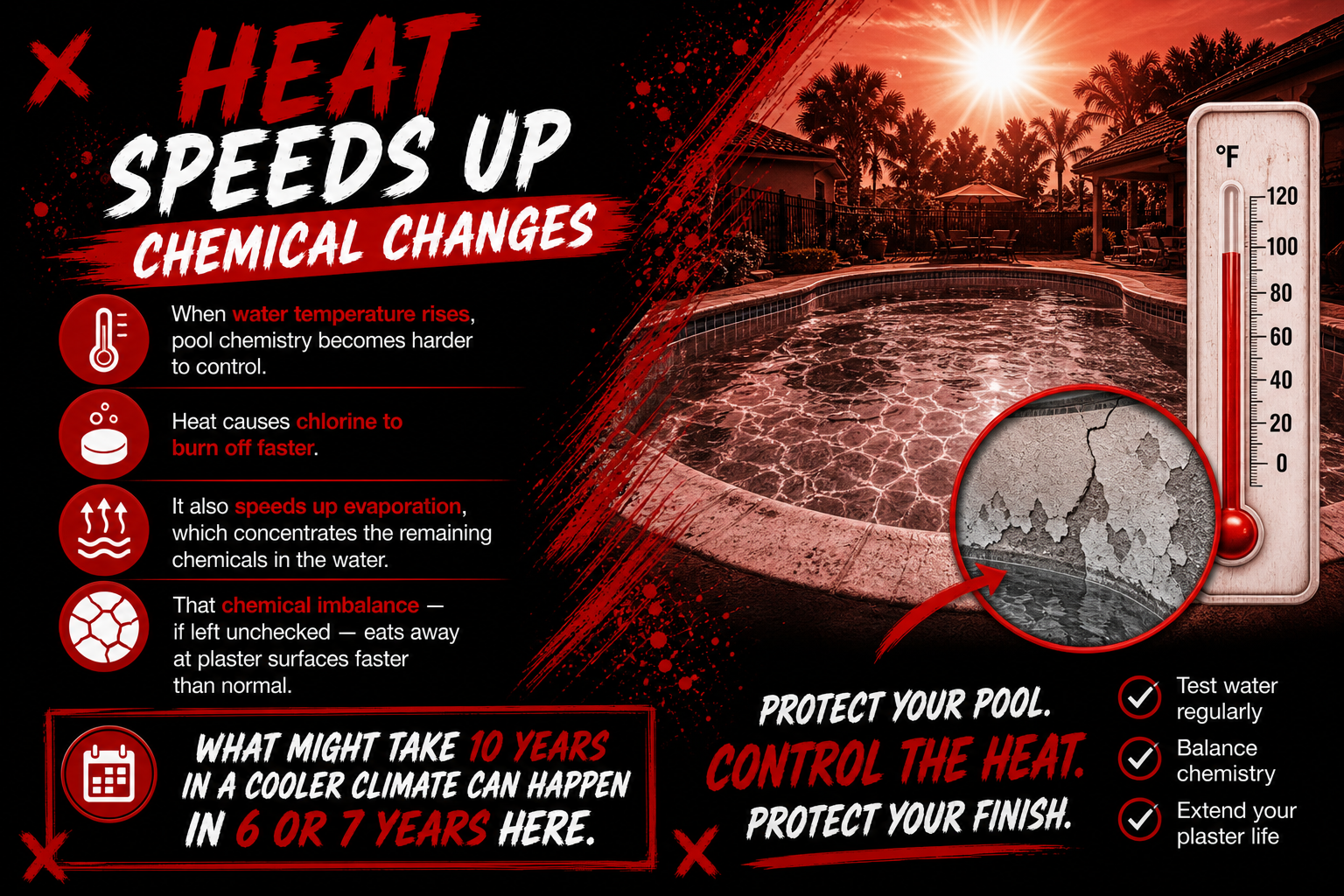
Heat Speeds Up Chemical Changes
When water temperature rises, pool chemistry becomes harder to control. Heat causes chlorine to burn off faster. It also speeds up evaporation, which concentrates the remaining chemicals in the water.
That chemical imbalance — if left unchecked — eats away at plaster surfaces faster than normal. What might take 10 years in a cooler climate can happen in 6 or 7 years here.
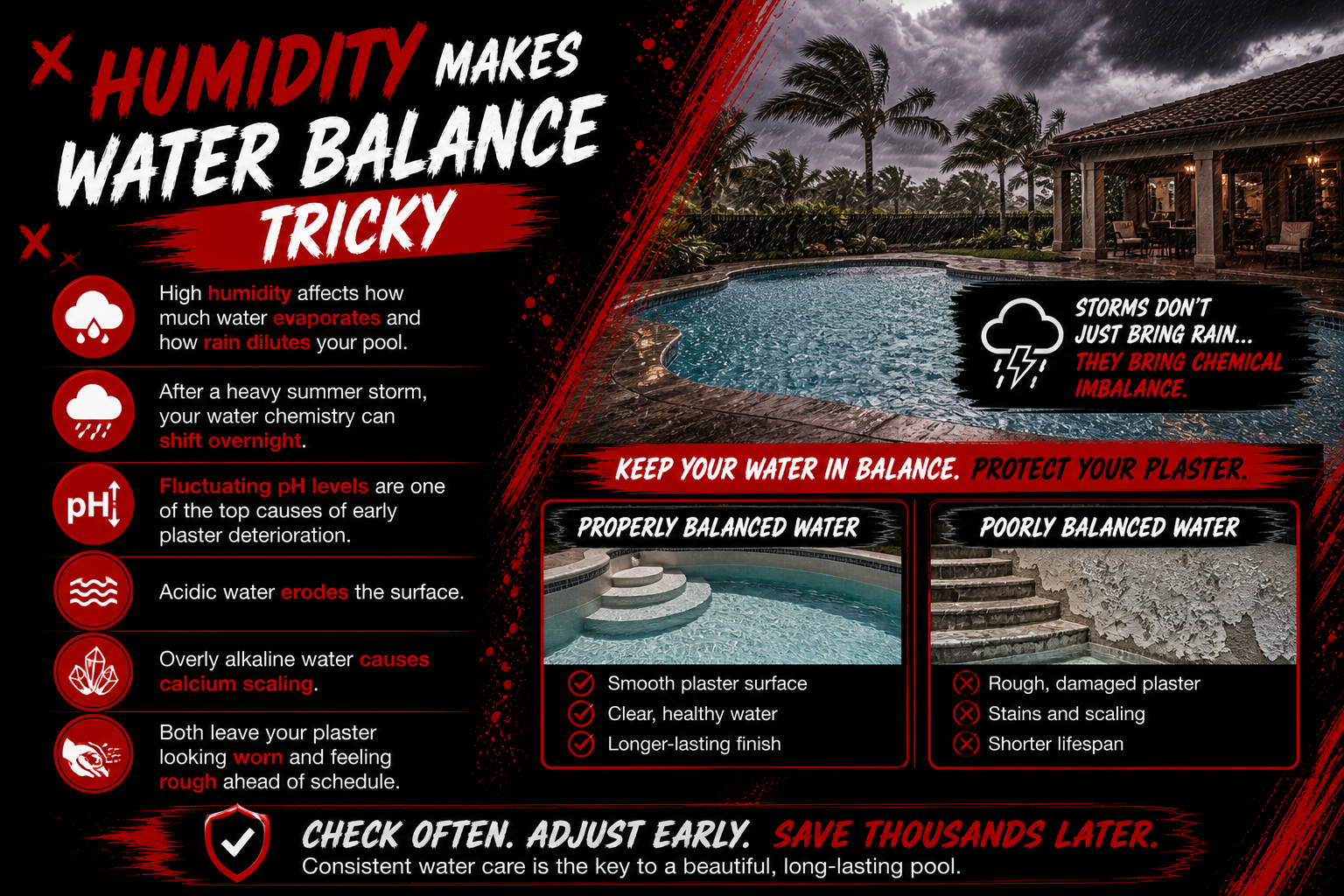
Humidity Makes Water Balance Tricky
High humidity affects how much water evaporates and how rain dilutes your pool. After a heavy summer storm, your water chemistry can shift overnight.
Fluctuating pH levels are one of the top causes of early plaster deterioration. Acidic water erodes the surface. Overly alkaline water causes calcium scaling. Both leave your plaster looking worn and feeling rough ahead of schedule.
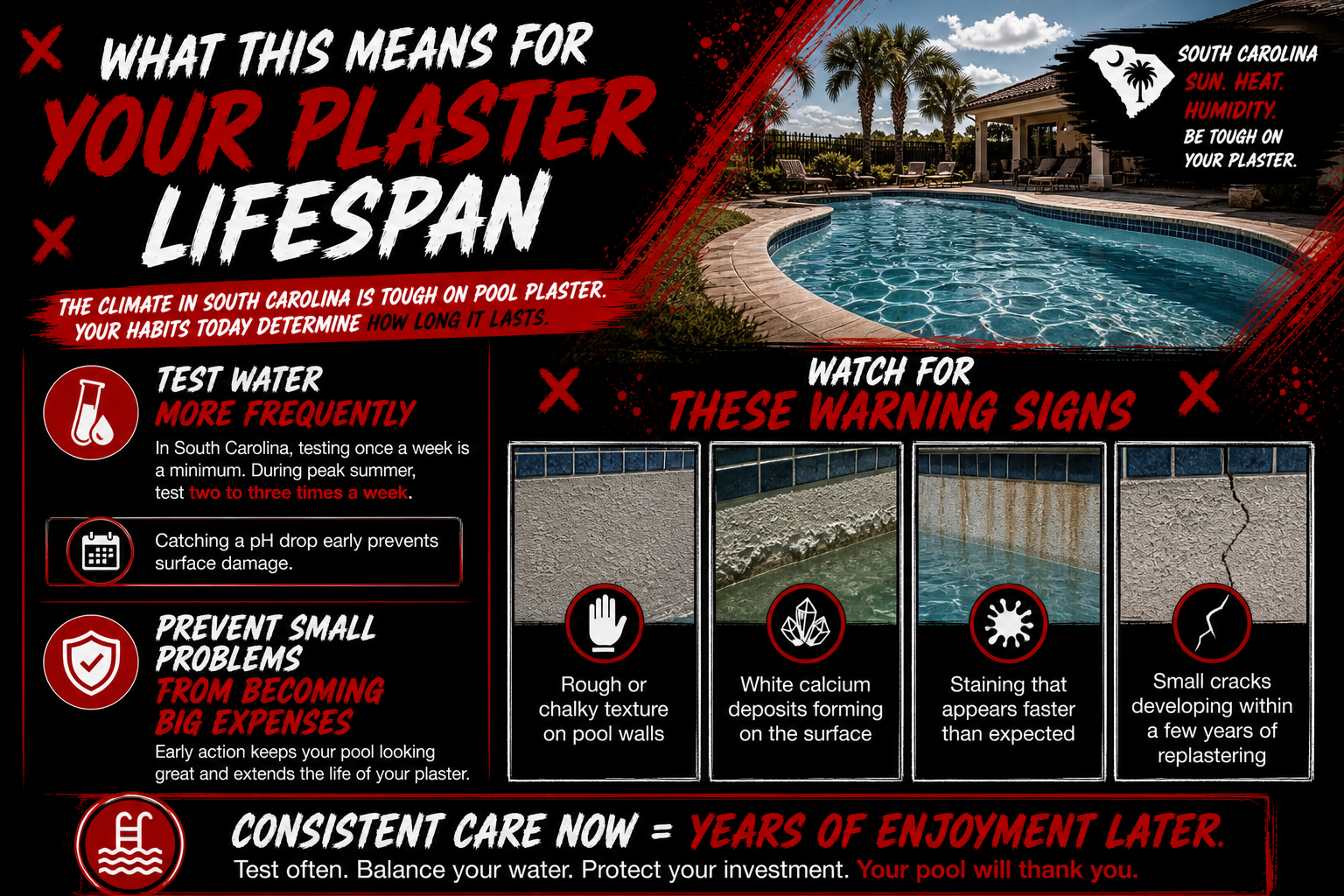
What This Means for Your Plaster Lifespan
Test Water More Frequently
In South Carolina, testing once a week is a minimum. During peak summer, test two to three times a week. Catching a pH drop early prevents surface damage.
Watch for These Warning Signs
- Rough or chalky texture on pool walls
- White calcium deposits forming on the surface
- Staining that appears faster than expected
- Small cracks developing within a few years of replastering
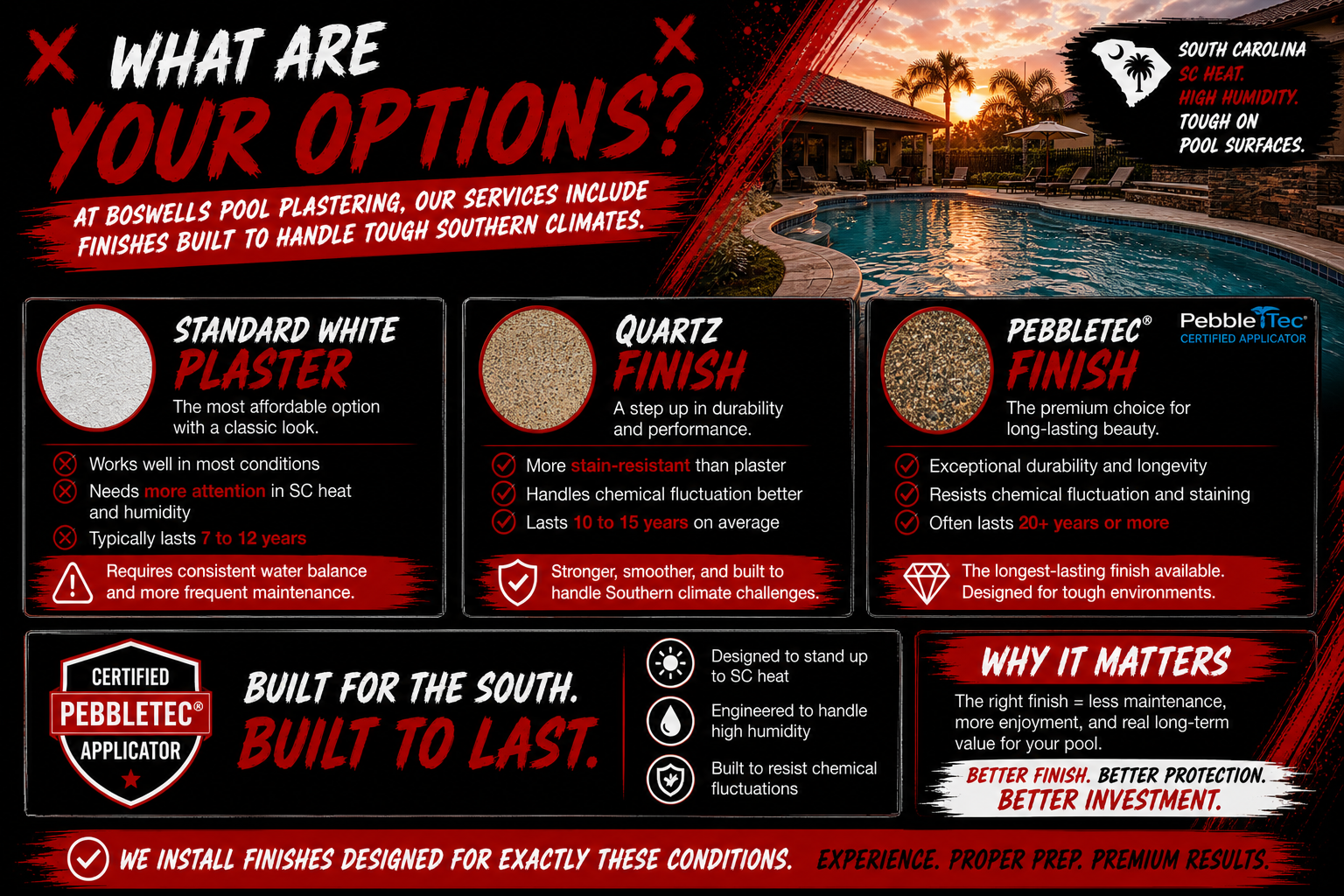
What Are Your Options?
At Boswells Pool Plastering, our services include finishes built to handle tough Southern climates. Standard white plaster works but needs more attention in SC heat. Quartz and PebbleTec finishes hold up better — they resist chemical fluctuation and last significantly longer in high-heat, high-humidity environments.
As a certified PebbleTec applicator, we install finishes designed for exactly these conditions.
About Us
Boswells Pool Plastering is a full-service pool plastering and restoration company serving Horry County and surrounding areas including Myrtle Beach, Conway, and North Myrtle Beach.
Final Thoughts
South Carolina heat and humidity affect your pool plaster in real, measurable ways. The good news is that with the right finish and consistent water care, your pool surface can still last many years.
Call us or contact Boswells Pool Plastering today for an honest assessment and to find the finish that handles our SC climate best.